Showing posts with label God/Christianity. Show all posts

Tuesday, December 10, 2013

The Freedom of a Christian

Today is a bit different. Rather than reviewing a book, I just wanted to reflect on a shorter piece that I read recently.

"The Freedom of a Christian" (1517) by Martin Luther reflects on the place of works and of faith in the Christian life. He begins by outlining why we can never earn our salvation--we are too sinful, and God is too good. Luther then argues for the importance of works, not as a way to earn salvation, but as a way to show our obedience to God and to discipline our more sinful nature.

Luther was a powerful writer. Of course I am familiar with the idea of justification by faith (that we can never earn our salvation; rather, it is a free gift from God) which Luther expounds here, but rarely has it been so comforting and condemning at the same time. I can stop trying to be perfect, because God loves me no matter what; I can stop trying to be perfect, because I cannot earn God's love or salvation.

Luther goes on to discuss the role of good works in a Christian's life. He sees several reasons to pursue good works and virtue, and he speaks firmly of the need for works in a Christian's life. I was struck by the strength of his statements about works for others: "Individuals do not live for themselves alone in this mortal body to work for it alone, but they live also for all people on earth; rather, they live only for others and not for themselves" (49). Have I ever viewed my self only as a way to help others? I somehow doubt it. It's challenging. Didn't Jesus do it? If so, we should be inspired to strive for a similar level of dedication and love to others.

----------------------------------------------------------------------------------------------------------

I read an abridged version of "The Freedom of a Christian" that is in The Protestant Reformation, a collection of Reformation documents edited by Hans J. Hillerbrand.

Thursday, November 21, 2013

The documentary hypothesis

Last week I mentioned the documentary hypothesis, which is about how the Bible was formed into its current form. When I was searching for a website to link my more curious readers to, I was surprised by how negatively Christianity seems to view this idea. When I searched for "Documentary Hypothesis", my first two pages of results consisted of the Wikipedia article about the hypothesis and extremely hostile refutations of the hypothesis on Christian websites. Why are Christians so hostile to this idea? And why are those Christians the ones whose websites appear first on a search? I know plenty of Christians for whom the documentary hypothesis is something they have no problem accepting, or at least considering.

Yes, I know the documentary hypothesis is not perfect. There are plenty of things about it that don't make total sense, like why the sources were put together the way they were (why so many duplicates? Did s/he/they really take sentences from two or three sources and smoosh them together?) (here is where wikipedia talks about it). But the basic idea is sound. I trust the people who've thought about it, much more knowledgeably than me. I've read enough about it and seen enough evidence that I'm willing to say that it makes sense and explains a lot (like why have two versions of creation in Genesis 1-2? Why does the same event, like Moses striking the rock to bring forth water, happen so often on the Exodus?).

So why do so many Christians argue so vehemently against the documentary hypothesis? It is jarring to think of the Bible as something written by real people, with their own culture and personalities and sins and situations, and not just as "perfect" and "one unified book". The Bible wasn't just handed down from heaven on a golden platter in its current form; God worked through broken humans to write the Bible, as He does to accomplish anything here on earth. It raises uncomfortable questions--how should I read the Bible? How do I take the original context into account? Does the Bible contain mistakes?

Yes, such questions are uncomfortable. But what is life without questions? I never want to live in a way that I stop asking questions--even when those questions are uncomfortable, even when I'm not sure that I want to know the answers, even when those questions are deeply unsettling and faith-shaking.

God is big enough for my questions.

Monday, November 11, 2013

The Riddle

Book: The Riddle by Alison Croggon (The Second Book of Pellinor)

Description: Maerad is a girl with a tragic and bitter past, but her powers grow stronger by the day. Now she and her mentor, Cadvan, hunted by both the Light and the Dark, must unravel the Riddle of the Treesong before their fractured kingdom erupts in chaos. The quest to solve this ancient puzzle lures Maerad ever closer to the seductive Winterking--author of her sorrows and the ally of her most powerful enemy, the Nameless One. Trapped in the Winterking's icy realm, Maerad must acknowledge what she has always suspected--that she is the greatest riddle of all. (book jacket)

My Thoughts: The Riddle has always been my favorite book of the Pellinor series. I relished the chance to reread it.

In many ways The Riddle answers many of the problems I had with The Naming, especially how easily Maerad seems to adjust to her new lifestyle. The Riddle opens and closes with Maerad struggling to deal with her own fears and assumptions and way of thinking, many of which things are heavily influenced by her earlier life as a slave. She struggles against the feeling that she doesn't belong anywhere that she and Cadvan travel to as well as with her feelings of inadequacy and ill-preparedness.

Again, The Riddle is masterfully written. Maerad and Cadvan travel all over the land of Annar and beyond, so that the story has an impressive breadth. Croggon doesn't create any radically new cultures, but each feels unique and authentic. Everything they encounter is beautifully described, and it was a joy to read, as always. Maerad's emotions were described beautifully as well, in a way that truly allows you to enter into her struggles and triumphs.

I was truly struck by a moment in Maerad's lessons, when her teacher tells her, "There is no single truth [...]. But all these truths, woven together, might give us a picture of what is true. That is why it's important to know all the different stories. We can never see all the sky at once." (p. 44) My first reaction was negative--there is only one truth!--but the more I thought about it, the more I was... well, intrigued. Of course it's not the first time I've run across this idea, but I was reading the novel right after reading a similar idea in the Old Testament class. A lot of modern scholarship on the first five books of the Bible (the Pentateuch) is based on the documentary hypothesis, which is that several sources were combined by final editors to create the Pentateuch as we know it today. Our textbook makes the point that the final editors weren't concerned with forcing each of these sources to agree; rather, they wanted to preserve the sacred tradition that each represented.* I interpreted this (quite possibly incorrectly) to mean that the final editors believed that each source contained truth, even if each source also appeared to contradict the other sources; there was a deeper truth that had to be preserved. As I write, I am also reminded of a C. S. Lewis example, of how each person ultimately experiences something of God that is different than what every other person experiences, and so knows God in a different way than any other person.** In both of these examples, I see an acknowledgement of the reality that no one single person (or book, or moment, or...) can perfectly and totally contain and represent the person of our infinite God. That is why different perspectives are so important (otherwise why have four gospels? Why not just one? Why have so many prophets preaching at the same time and the same place?). Each one contains truths--and probably also untruths. It is narrow and arrogant to assume that each person has the same experience (as you) in life, and those different experiences mean that certain truths and perspectives will resonate and make sense and seem more true to some people than they will to others--each person has different passions! But each perspective contains a unique knowledge of an uncontainable, indescribable God.

A wonderful story of maturing, and beautifully written. As always, the Pellinor series is highly recommended!

-----------------------------------------------------------
* Michael D. Coogan. The Old Testament: A Historical and Literary Introduction to the Hebrew Scripture. p. 106.
** I'm afraid I have no idea where this example is from. If I had to guess, I would say either Mere Christianity or The Problem of Pain.

Monday, September 2, 2013

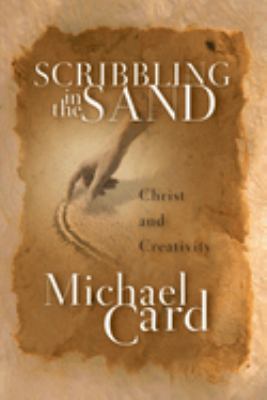
Scribbling in the Sand

Book: Scribbling in the Sand: Christ and Creativity by Michael Card

Description: In this book Michael Card explores the biblical foundations of true Christian creativity. Whether we think of ourselves as creative or not, all of us are created in the image of our Creator God, and thus creativity is a vital expression of our discipleship. With Jesus as his model, Card shows how understanding God's creative imagination leads to a lifestyle of humility, obedience and servanthood. And he invites us to follow God's creative call through worship and community. (from michaelcard.com)

My Thoughts: What a wonderful book!

Scribbling in the Sand is meant as a book to induce thought, not necessarily as a way to encourage creativity. Card spends the first part of the book describing Biblical instances of creativity (Adam naming the animals, Jesus' creativity in his ministry, the prophets and poetry...), which I really enjoyed. He then described several traits that any Christian artist should have. This section challenged me a lot and made me think about so many things, because these traits were exactly the traits that any Christian should have: humility, servanthood, obedience, love. The fact of being an artist is not the thing that defines any Christian artist; rather, their identity as a child of God and everything that implies (humility, etc.) is what defines any Christian artist. The 'Christian' is the important part, not the 'artist.'

The other of Card's points that really, really struck me was that any art that we create, however good or bad, however many people do or don't see/read/hear it, is worship. Art, in its purest form, is a form of worship of God. Why else would we use music in worship services? Why else would the psalmists and prophets speak in poetry (and probably accompanied by music)?

As an artist (I write), I enjoyed and struggled with this book. I have always struggled with finding a proper balance between my writing and God; it is so easy for me to fantasize uncontrollably about my stories and forget the God who is the ultimate Creator and Author (I've written a lot about it on my blog A Light to My Path, especially this post from a little more than a year ago). And so I immensely enjoyed and was challenged by Scribbling in the Sand: it painted a picture of what my writing could be while highlighting all the places I've fallen short. It gave me hope.

Perhaps the section that I most enjoyed was the last one, where Card included letters from various famous Christian artists about their views of art and artists in relation to Christ and His mission. I loved their advice and wisdom.

Incredibly highly recommended to anyone who sees themselves as a Christian artist of any kind--and perhaps even to those Christians who don't see themselves that way, because Scribbling in the Sand was so much more about Christianity than it was about creativity. That was rather the point of the book--our Christianity is so much more important than our creativity, even if the two are intertwined.

Thursday, August 29, 2013

The Gospel of Ruth

Book: The Gospel of Ruth: Loving God Enough to Break the Rules by Carolyn Custis James

Description: Traditionally, the book of Ruth is viewed as a beautiful love story between the submissive Ruth and Boaz, the Kinsman Redeemer. But when author Carolyn Custis James began digging deeper, she found startling revelations. Three lives converge in a powerful alliance that transforms their lives and changes the world. Naomi, Ruth, and Boaz discover God makes much of broken lives, that he calls men and women to serve him together, and that he's counting on his daughters to build his kingdom. (Back of the book)

My Thoughts: The Gospel of Ruth was an excellent, excellent book, written passionately, thoughtfully, and knowledgeably. As a woman, I deeply appreciated her candid, well-researched look at women and their place in God's kingdom, as examined in the book of Ruth, as well as her own honesty with the reader.

James provides excellent historical and cultural context to help readers understand what was truly going on in the book of Ruth, such as the true desperation of widowhood in Biblical times (and in many patriarchal societies today) and how little power women had in such societies. Her explanations deeply richened and changed my understanding of the book of Ruth and of the lives of all women in the Bible.

The Gospel of Ruth argues against the idea that the book of Ruth is just a romance; instead, James views it as a story of suffering and passionate seeking after God. I especially appreciated that she didn't shy away from the suffering of most of the characters in Ruth or try to minimize it in any way--Ruth having a new husband at the end if the story doesn't lessen the loss and pain of the death of her first husband, or eliminate the memory and pain of her earlier hard times in Bethlehem. James also didn't shy away from the suffering in her own life, opening up about several difficult times in her own life.

Finally, The Gospel of Ruth was a passionate cry for women to be a part of God's kingdom and God's redemption of our broken, fallen world. He loves us and calls us to be a part of His purposes just as much as any man.

A beautiful, well-written book about women and men, and their place in the Kingdom of God. I literally enjoyed The Gospel of Ruth so much that I read it in three days, and I can't wait to read more of James' books. I so highly recommend it!

Thursday, April 18, 2013

A Place for Truth


Book: A Place for Truth

Description: Many today pursue knowledge and even wisdom. But what about truth? In an age that disputes whether truth can be universalized beyond one's own personal experience, it seems quaint to speak of finding truth. But whether in the ivory towers of the academy or in the midst of our everyday lives, we continue to seek after the true, the beautiful and the good.

Since its founding at Harvard in 1992, The Veritas Forum has provided a place for the university world to explore the deepest questions of truth and life. What does it mean to be human? Does history have a purpose? Is life meaningful? Can rational people believe in God? Now gathered in one volume are some of The Veritas Forum's most notable presentations, with contributions from Francis Collins, Tim Keller, N. T. Wright, Mary Poplin and more. Volume editor Dallas Willard introduces each presentation, highlighting its significance and putting it in context for us today. Also included are selected question and answer sessions with the speakers from the original forum experiences.

Come eavesdrop on some of today's leading Christian thinkers and their dialogue partners. And consider how truth might find a place in your own life. (from Amazon.com)

My thoughts: This was a fantastic collection of speeches about Christianity. Most of them are designed to be accessible to both Christians and non-Christians, which is great. I enjoyed reading them, and found that they both challenged and encouraged me, but I think they could also be read by a non-Christian. All of the speakers were very open about their own faith and why they believed what they did. I especially enjoyed the wide range of disciplines represented by the speakers, from an astrophysicist to a social scientist to at least one philosopher. Most of the speakers were Biblically arguing for a culturally, socially, scientifically relevant Christianity, which is a wonderful reminder for us Christians of what Christianity should look like and an appeal to seekers and those who are just curious to just think about Christianity and what it claims. (Those that weren't were admitted atheists, brought to speak about the same topic and provide a more balanced debate).

As mentioned in the description, the idea of truth was very important to this book, and the whole first section was dedicated to various lectures about truth and whether it exists. (The sections were Truth, Faith and Science, Atheism, Meaning and Humanity, Christian Worldview, and Social Justice). Obviously I believe that truth does exist, but nonetheless I began reading this book at a time where reading various essays about truth and why people believe in ultimate truth was very helpful for me. The social justice section was also very powerful for me, simply because it expanded much more on how to truly live out your faith and challenged me to think more about what Christianity should truly look like in terms of how it acts towards others.

Highly recommended.

Tuesday, February 19, 2013

Real Life

Firstly, I'm so sorry for the lack of posts last week. Last week was crazy, and I have been having some trouble motivating myself to read and post reviews up here. I hope to get back into the swing of things this week. :)


Book: Real Life by James Choung

Description: What does it mean to follow Jesus? And how should we help others become more like him?

Once upon a time, being a Christian seemed clear. Say these words, pray these prayers, do these things. But out in the real world, following Jesus feels more nebulous. What's the point?

That's Stephen's struggle in these pages as he wonders if he has missed his calling. In this compelling narrative, James Choung explores what it means to follow Jesus in the real world. Is Christianity something you just believe in, or can it be something you actually live out? Engineer Stephen wants to encourage his younger colleague Jared in his spiritual journey, but both feel at a loss. Stephen's friend Bridget offers insights on how Boomers, Xers, Millennials and younger generations approach spiritual questions, with implications for discipleship, community and service. Together they walk through deepening stages of faith as they discern how God is calling them to live.

Join Stephen, Bridget and Jared on their journey of following Jesus, as they discover what it means to move from skeptic to world-changer. And find new pathways for Christian discipleship and disciplemaking in a world yearning for hope. (from amazon.com)

This book was split into two parts, a novel and then a more information-based section at the end that summarized all the information given in the novel section. I really enjoyed the novel part--it was fun and informative, and written in a style that kept me interested and felt real. The characters were all very real; they struggled with Christianity, sinned, and yet were exactly the kind of people I would like to be someday (especially by the end). All right, a few people felt a bit too perfect, but I only noticed in retrospect; while reading, I definitely did not notice. The information part at the end was less interesting. It felt rather long, and just repeated what was already said in the novel part. It is, however, worth noting that I read this novel in three or five days and everything that had happened earlier was still fresh. The information section would probably be much more useful if I were coming back to the book after a long period of time and I just wanted to look up a few methods or facts or whatever without having to read through all the characterization.

Both parts of the book are about how to actually live for Jesus, especially in everyday life: how to witness effectively and in a way that is authentic, how to live for Jesus. It was focused on college-aged people overall, but the book is published by InterVarsity Press, and InterVarsity is a primarily campus-based ministry.

Real Life had a very powerful message about how to empower Jesus followers and align our lives to God, as well as practical tips as to how to live that out. I very much enjoyed this book and would highly recommend it, especially to anyone struggling with how to share his or her faith in a real, effective way.


Thursday, February 7, 2013

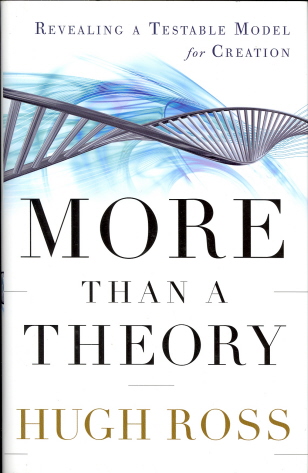
More Than A Theory


Book: More Than A Theory by Hugh Ross

Description: Christians are increasingly challenged with evolution theories as the only models for the origins and histories of the universe and life. But is there any valid scientifically testable alternative?

In More Than a Theory, Hugh Ross offers a comprehensive, testable creation model. This fascinating book responds to the recent, well-publicized challenged from aggressive atheists to the idea of a creator. It also reminds the scientific community of what constitutes good science. Furthermore, it supplies Christians with the scientific information they need to defend their conviction that the Creator is the God of the Bible. (from Reasons to Believe Shop)

This was a powerful, convincing outline of a creation theory based on both current science and the Bible. I found Ross's explanations extremely convincing.

Strengths of this book included an overwhelming amount of evidence that there are many, many factors (over 800) that had to be fine-tuned to make human life on earth possible--things like the brightness of the sun and how that is balanced by the atmosphere, and the amount of tectonic plate activity. The chances for that happening randomly are astronomical--1 in 101,050--and it just deepened my conviction that God is an awesome God!

I also really like how everything was framed as a model, open to scientific testing. Finally, Ross made a really interesting point/claim: that the western emphasis on Darwinian/naturalistic evolution, and our refusal to let that be challenged (at least in science) makes science boring, and that's why there's so few new scientists in many western countries. Ross really did a good job explaining the science.

Criticisms: 1) Closed-mindedness about certain things, such as that humans must have fossil fuels and technology to develop advanced civilization and that life had to be the way it turned out. Seriously? 2) Insistence that all of earth is here only for humanity's benefit and pleasure. I know that this is to some degree stated in Scripture, and part of my irritation comes from the fact that I'm still struggling to figure out what I think it means. 3) Insistence that humans have to have been "specially" created, i.e. not related to hominids. The Biblical basis for this was never explained, and I'm not sure there is one. Wasn't every single species specially created? I think God taking the time to cause evolution to go a certain way to create a species is pretty special and counts as special creation, even if that is how all species are created.

Overall, a strong book, well-written and well-researched, about God's role as Creator and how that fits into current scientific knowledge. Highly recommended!

Monday, January 21, 2013

This Present Darkness


Book: This Present Darkness by Frank E. Peretti

Location: USA

Description: Ashton is just a typical small town. But when a skeptical reporter and a pastor begin to compare notes, they suddenly find themselves fighting a hideous plot to subjugate the townspeople—and eventually the entire human race. A riveting thriller, This Present Darkness offers a fascinating glimpse into the unseen world of spiritual warfare. (from Amazon.com)

My thoughts: Wow! 

This was an amazing book. It describes the spiritual warfare going on Ashton, partly from a spiritual point of view (i.e. angels' and demons' perspective) and partly a human point of view. I found it fascinating. Spiritual warfare is never something I'd thought about before reading this book. It was a cool wake-up call and portrayal of the situation. The aspects of it that stood out the most to me were that humans actually had very little power to control what was going on around them--a lot of things were controlled by either angels or demons, including (or perhaps especially) overcoming temptation--and the power of prayer. How awesome is that, that God gave us this power that can change the tide of the battle?? 

The other thing I really liked about this book was how it handled anything vulgar. There was a fair amount, actually, but Peretti would always say something like, "There was something extremely vulgar painted on the side of his house", rather than actually saying what was painted there. Didn't really how nice that was until Peretti did it here.

One thing I disliked was the fact that it seemed like God actually had almost no part in people's day-to-day lives or in spiritual warfare; rather, it was all controlled by angels and demons, and angels got their strength from prayer (man did this book make me want to pray!). It is true that the power of prayer comes from God, and it was God that determined the timing of certain battles (telling the angels not to fight until a certain point and whatnot). Another was the fact that there was this understood, unspoken idea that people aren't responsible for what they do while possessed. Maybe he was just trying to show forgiveness in that no one ever asked or mentioned it... not sure. It's a bit like Paul's attitude in 2 Corinthians 12, but it is pretty clear throughout the Bible that God will hold us accountable for our sins.

The one thing that I most disliked was the association throughout the story between liberalist and nature (or nature-loving) people and the demons/evil. However, loving nature is a perfectly Biblical attitude, as long as nature doesn't come first. God created nature and loves it (Genesis 1, for instance), and He is in nature (see Job 37-39, Psalm 8, Psalm 104, and Romans 1:18-20, to name a few). I don't think it's pagan of me to think that. Along with this association came the association of anything "Eastern" with demons (meditation as a way to communicate with demons, for instance). That aspect of the book was not well-done.

However, that was probably the only aspect of the book that I truly disagreed with. Overall this was a wonderfully well-written and thought-provoking book. Highly recommended!

Saturday, January 5, 2013

The Problem of Pain


Book: The Problem of Pain by C. S. Lewis

Description: Why must humanity suffer? In this elegant and thoughtful work, C. S. Lewis questions the pain and suffering that occur everyday and how this contrasts with the notion of a God that is both omnipotent and good. An answer to this critical theological problem is found within these pages. (from Amazon.com)

I know this book isn't one of Lewis's better known books, but I felt God telling me to pick it up one day when I was feeling down. The timing was pretty perfect, too; about two weeks after I began reading The Problem of Pain, three of my acquaintances were in a train accident and two of them ultimately died. I found this book helpful as I was working through my questions and grief.

I actually ended up reading it twice, to give myself more of a chance to think about and reflect on what Lewis said. This was a very small book, not much over 100 pages, but there was a lot in there and a lot to think about. I found it very comforting, helpful, and insightful, even if I didn't agree with everything Lewis said (mostly about animal pain, which is admittedly something that's not discussed in the Bible very much). Lewis is so good at explaining thing with good, real-life examples.

I would highly recommend this book, especially to anyone struggling with this question.

Tuesday, October 23, 2012

A Matter of Days


Book: A Matter of Days by Hugh Ross

DescriptionAn old-earth view takes on the challenges of young-earth proponents through a study of history, Scripture, and nature-and a testable creation model. (from Amazon.com)

This was a really good book. I found it thought-provoking and well-reasoned. It's about reasons, both Biblical and scientific, to believe in long creation days. By long creation days Ross meant "days" representing epochs rather than literal 24-hour days. Also focused on fostering reconciliation between people who believe in long vs. short (24-hour) creation days.

I would highly recommend this book to anyone curious about creationism, of any kind. It was much better and more accessible than Fingerprint of God, another Hugh Ross book--there was much, much less math, and all the science he uses as evidence is much better explained. There was also nothing theologically objectionable about this book--Hugh used just as much Biblical evidence to support his claims as scientific, if not more. He assumes that the Bible is absolutely true--every single word. It's an amazing point to start from. (There are some cool Bible verses that support current science!)


As is probably obvious by now, I do not believe in creation taking place in 6 24-hour days. I believe that evolution has happened in the past, and to some extent is happening in the present day. Why? Firstly, evolution is something that is happening, according to science, and it's something that scientists have figured out to a decent amount. Life does not stay the same. Why would God create a world that seemed to be billions of years old, where evolution appeared to be happening and have been happening for billions of years, if that wasn't true? That would be lying, and God doesn't lie. Obviously not all of science is right, but evolution is something that has stood up to tests for over a hundred years and been tested by literally millions of scientists. I think it's reasonable to accept that it has happened and is happening, at least to some extent.

Please don't get me wrong--I absolutely believe in God, specifically the God of Christianity who sent His son to die for our sins. I just also believe that evolution is perfectly compatible with Christianity and the God of the Bible. There are a lot of holes in the theory of evolution as it's argued by the scientific community in general. It continues to argue that evolution is a purely random process, when mathematics show that the chances of that, and of life evolving in only 3 billion years, are so unbelievable miniscule. It continues to argue that evolution is a purely random process, when all of life seems to have been preparing earth for humans to live there: the fact that water is exactly perfect to support life (for instance being lighter frozen, allowing warmer water to stay protected from the colder temperatures and therefore allowing life to live in it); the asteroid that wiped out the dinosaurs, allowing humans to evolve from the mammals of the time; cyanobacteria evolving photosynthesis, which creates oxygen as a byproduct and eventually led to the evolution of creatures that need oxygen to breathe (like us); the fact that life has always shows a tendency to become larger and larger. There's also so much that evolution can't explain about life itself; all of the important evolutionary 'innovations' (the origin of life, having multiple cells working together, moving from the ocean to land, flight) are things where scientists can clearly see the stages, but are completely incapable of figuring out why or how the first stage led to the second one. To me, that points to God.

The other aspect of evolution that, to me, points to God is how evolution happens. There's a lot of talk about natural selection in many discussions of evolution, but the truth is that, at least in the scientific community, most scientists today believe that random chance is the single largest driving factor of most evolution. The reason most populations that are separated from each other become so different as to become separate species is not because of natural selection leading to different adaptations; it's because of randomness in their environment (like a flood that wipes out half of the population) or their genes (a mutation, or purely in which genes get passed on and which don't) that is the reason that most populations become different enough to be seen as different species. Except, of course, that as a Christian I believe that nothing is random. God has His hand in everything, and everything happens for a reason. All of those 'random' occurrences in evolution are really God, shaping life to become how He wants it.

Sunday, August 26, 2012

The Fingerprint of God


Book: The Fingerprint of God by Hugh Ross

Description: Dr. Hugh Ross, astromomer, tells the fascinating story of how the latest research into origins not only has sealed the case for divine creation, but has revealed the identity of the Creator Himself. (from Amazon.com)

Overall, I found this book to be a very worthwhile read. Ross attempts to prove with science why God must have created the universe and life, rather than seeing science and religion as polar opposites--a refreshing change, I must say. He also discusses, much more briefly, reasons why Scripture does not actually conflict with the scientific evidence for how the universe was created.

Honestly, those parts of the books were the parts that I enjoyed the most. I love biology, but I get sick of the assumptions that evolution and Creation are two mutually exclusive ideas. They are not. After all, 
it is also safe to assume that physical evidence will not lie, because God created the evidence and God can't lie (although misinterpretations could of course still happen). Ross even goes so far as to argue that one can only reach the fullest understanding of God through a combined knowledge of Scripture and nature.

I will admit, however, that I had some problems with this book. The first half at least of the book was about astrophysical proof for God, and was written in a way that I couldn't understand most of the proofs or why they were so impressive. Too much math and quantum mechanics for me! So I didn't exactly feel convinced by the end of it.

★★★★

My favorite quote: "One further consideration [of the reasons for creation] from an altogether different perspective concerns the nature of creativity itself. Observe any skilled sculptor, painter, or poet, a craftsman of any kind. Observe the painstaking, yet joyful labor poured into each object of his design. Examine the creation on any scale, from a massive galaxy to the interior of an atom, from a whale to an amoeba. The splendor of each item, its beauty of form as well as of function, speaks not of instantaneous mass production, but rather of time and attention to detail, of infinite care and delight. Such delight is expressed throughout Genesis 1 in the oft-repeated statement, 'And God saw that it was good.'" (160)

Sunday, August 19, 2012

Is God a Moral Monster?


Book: Is God a Moral Monster?: Making Sense of the Old Testament God by Paul Copan

Description:  A recent string of popular-level books written by the New Atheists have leveled the accusation that the God of the Old Testament is nothing but a bully, a murderer, and a cosmic child abuser. This viewpoint is even making inroads into the church. How are Christians to respond to such accusations? And how are we to reconcile the seemingly disconnected natures of God portrayed in the two testaments?

In this timely and readable book, apologist Paul Copan takes on some of the most vexing accusations of our time, including:

God is arrogant and jealous
God punishes people too harshly
God is guilty of ethnic cleansing
God oppresses women
God endorses slavery
Christianity causes violence
and more

Copan not only answers God's critics, he also shows how to read both the Old and New Testaments faithfully, seeing an unchanging, righteous, and loving God in both.

This book was very enlightening for me. The seeming differences between the God of the Old Testament, who at the very least seems much more legalistic and violent than the God of the New Testament, are something that I've had questions about for a long time. I was therefore pretty excited about reading this book, and I wasn't disappointed. 

Copan did a very good job explaining why God seems the way that He did in the Old Testament. He mostly focused on the Law and explaining how and why they came to be. He also talked, surprisingly a lot, about how those laws apply to us today. I'm not saying Copan calls for us to follow the Law today, because he definitely doesn't. Instead, he examines what aspects of God made Him create the Law the way He did. One example that really struck me was the food laws, about unclean and clean animals. Copan argued that these laws were so all-encompassing to remind the Israelites that God should be everywhere in their life. A reminder we could all use, huh?

Although I have no background in Biblical scholarship or anything of that kind, I found Is God a Moral Monster? easy to read and understand. Copan's knowledge of and use of Scripture was also extremely impressive. My one complaint was that Copan's chapters became repetitive at times, as he seemed to be making the same point over and over. But it was a small problem for me as a reader, and I would absolutely recommend this book to anyone who's interested in the topic.