Wednesday, January 9, 2013

Star Wars!!

I think first I'll start off with an explanation. I think there are plenty of Christians out there who would hesitate to read any Star Wars novels because of the clear element of mysticism in the books, and that is definitely a valid concern. However, I think there are some equally good reasons to read them, as well. I find them acceptable for several reasons:

1) Most Star Wars books include characters that have a strong sense of right and wrong. In my reading of non-Christian fiction, I've found that this can be difficult to find. Characters will do things knowing full well that even though it's the right thing to do, they will probably get in serious trouble and/or die because of it. And then they do it anyway. This is a valuable thing to read about, even if the motivation isn't a desire to please God.
2) Star Wars books often grapple with questions that any Christian or human being needs to think about, including friendship and love, power, evil and good, and humanity (in a broad sense--there's a lot of aliens).
3) Most Star Wars books do not include description of violence, blood, intimate moments, or anything else that a reader could object to. As someone who does object to most of those things, I really appreciate it. There is also no swearing (although they do use swear phrases of the Star Wars universe).

Qualifier: The Star Wars universe, and the books, comic books, movies, and video games that describe it, have been written and created by a wide variety of people. Almost all of the books I've read were completely unobjectionable (with the exception of Shatterpoint by Matthew Stover. However, this book was based on Heart of Darkness, so it wasn't particularly surprising). However, I have almost only read books set after the fall of the Empire but before Han and Leia's children begin to train to become Jedi, and these were some of the earliest books written about the Star Wars universe. Later books may have changed. I also have no experience with any of the video games, which are probably less unobjectionable.

And now, without further ado... a book review!

Book: Jedi Search by Kevin J. Anderson
Book 1 of the Jedi Academy Trilogy

Description: While Luke Skywalker takes the first step toward setting up an academy to train a new order of Jedi Knights, Han Solo and Chewbacca are taken prisoner on the planet Kessel and forced to work in the fathomless depths of a spice mine. After Solo and Chewbacca escape, they flee desperately to a secret Imperial research laboratory surrounded by a cluster of black holes-and go from one danger to a far greater one. (from wikipedia.com)


OK, this probably wasn't the best book to choose for my first Star Wars book review. I wasn't particularly impressed. I must say, the plot felt to me like a string of basically unconnected events. Most of the events were pretty improbable and slightly silly, even taking place in the Star Wars universe, and felt as if Anderson thought something like, "I've always wanted Luke Skywalker to use the Force to walk across a pit of boiling lava while almost being eaten by a cool worm-dragon that lives in lava. How can I make that happen?" 

OK, the lava-living worm-dragon (officially known as a Fireworm) was pretty cool: 
Photo source
But still. 

I would recommend this book only to get to the next book in the series, because the series does get a lot better.

Saturday, January 5, 2013

The Problem of Pain


Book: The Problem of Pain by C. S. Lewis

Description: Why must humanity suffer? In this elegant and thoughtful work, C. S. Lewis questions the pain and suffering that occur everyday and how this contrasts with the notion of a God that is both omnipotent and good. An answer to this critical theological problem is found within these pages. (from Amazon.com)

I know this book isn't one of Lewis's better known books, but I felt God telling me to pick it up one day when I was feeling down. The timing was pretty perfect, too; about two weeks after I began reading The Problem of Pain, three of my acquaintances were in a train accident and two of them ultimately died. I found this book helpful as I was working through my questions and grief.

I actually ended up reading it twice, to give myself more of a chance to think about and reflect on what Lewis said. This was a very small book, not much over 100 pages, but there was a lot in there and a lot to think about. I found it very comforting, helpful, and insightful, even if I didn't agree with everything Lewis said (mostly about animal pain, which is admittedly something that's not discussed in the Bible very much). Lewis is so good at explaining thing with good, real-life examples.

I would highly recommend this book, especially to anyone struggling with this question.

Monday, December 31, 2012

2012 Overview

It seems hard to believe that 2012 is almost over!! I can hardly wait to see what 2013 has in store. 2012 was a good year for me, and I hope it was for everyone else, too.

I just thought I'd list my favorite books of 2012 (in the order that I read them):
The Rape of Europa by Lynn Nicholas
The Three Musketeers by Alexander Dumas
King Leopold's Ghost by Adam Hochschild
Heart of Darkness by Joseph Conrad
Shatterpoint by Matthew Stover
Death Comes as the End by Dame Agatha Christie
Emma by Jane Austen
The Design Revolution by William Dembski
The Immortal Life of Henrietta Lacks by Rebecca Skloot
The Neverending Story by Michael Ende
Sir Gawain and the Green Knight
A Matter of Days by Hugh Ross
The Adventures of Sherlock Holmes by Sir Arthur Conan Doyle
The Craft of Research by Wayne C. Booth, Gregory C. Colomb, and Joseph M. Williams
Around the World in Eighty Days by Jules Verne
I, Robot by Isaac Asimov
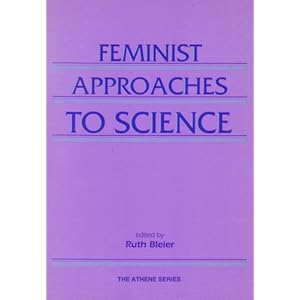
Feminist Approaches to Science
Whose Body? by Dorothy L. Sayers

Saturday, December 29, 2012

A Brave New World

Book: A Brave New World by Aldous Huxley

Published: 1931

Description: Aldous Huxley's tour de force, Brave New World is a darkly satiric vision of a "utopian" future—where humans are genetically bred and pharmaceutically anesthetized to passively serve a ruling order. A powerful work of speculative fiction that has enthralled and terrified readers for generations, it remains remarkably relevant to this day as both a warning to be heeded as we head into tomorrow and as thought-provoking, satisfying entertainment. (from Amazon.com)


Well, my overall impression of this book was that Huxley very much succeeded in creating a thoroughly creepy vision of the future (NOT "satisfying entertainment"). He created a world where everyone is so completely shaped by society that no one thinks for themselves. 

Huxley did a fantastic job building his future world. When I read this book, I felt like I was there, and none of the characters ever acted out of place in their society. I think he was also spot-on in depicting human weakness: if anything would convince us fallen humans that everything is absolutely all right, it would be constant pleasure.

That said, I didn't actually enjoy this book that much. Yes, it was very thought-provoking, and there were some interesting thoughts and discussions about the nature of religion. However, be warned that there is a fair amount of sexual activity (it was the time of Freud, after all--Huxley's society practically revolves around sex, along with consumerism). This was ultimately a book that revealed a possible future and current problems in society without proposing any sort of solution: ultimately, a very despairing book that I wouldn't recommend.

Wednesday, December 26, 2012

Feminist Approaches to Science

Book: Feminist Approaches to Science, edited by Ruth Bleier

Published: 1986


Description: A collection of essays looking at feminist theory and how it relates to science, how science is practiced, and how it can improve scientific thought. (My description)


Perhaps I should begin by stating that I am not a feminist. I simply read part of this book for a class, was intrigued, and checked it out so I could read the rest of it.


I thought this was a really, really good book. It was very thought-provoking. The whole idea behind this book was the critique science from a feminist perspective. I don't totally identify with such a perspective, but they did raise many very good points about problems that existed when the book was written (1986) and, I would argue, are still problems today. Their ultimate point was that science is not practiced in a vacuum. Scientists are not somehow perfect and without bias as they practice science. Scientists are influenced by the society around them, by racism, sexism, classism, whatever, and this affects how they interact with their work and with other scientists or would-be scientists. I found their argument interesting both because it's something that science today still needs to hear, and because it applies not just to women in science and how they're treated, but how all of science is done and how that applies to arguments about creationism (something I'm always interested in). 


I had one major critique of this book: Authors seemed to argue both that men and women are exactly the same and should be treated as such, and that women have a different perspective and way of thinking than men and therefore perform science differently. I believe this was partly caused by the different authors of the essays, but it is definitely a problem in their logic.

Thursday, December 20, 2012

The Courtesan's Jewel Box

Book: The Courtesan's Jewel Box

Country: China


Description: This is a selection of popular Chinese stories from the 10th to 17th centuries. These stories were written in the spoken language that developed as a literary medium after the emergence of an urban commercial economy in the Song Dynasty (A.D. 960-1279). Originally the manuscripts of ordinary street story-tellers, this genre of fiction –deriving its material from the life and times of the period, with vivid writing and intricate plots, descriptions that are natural and vivacious– has now attained a lofty place as literature.
The twenty stories in this book were selected from over two hundred in several collections published at the beginning of the 17th century. (from Amazon.com)

This was a good book, I thought. It gave me a much better feel for what it would actually be like to live in China than either of the other two books I've read about China. The stories in this book were purposefully mostly about normal people, so I got a feel for the customs of China. This included the fact that women were only bargaining chips in some of the stories (but not all), the fact that men could have more than one wife, the social structure of China, the mixture of religions, the fact that money is carried around on strings, and lots of other small but interesting facts.

Since it was an anthology, there was a mixture of stories, some better than others. Some of my favorites were "The Courtesan's Jewel Box" (a love story) and "Lazy Dragon" (the story of, essentially, the Chinese version of Robin Hood).

Would recommend to anyone with an interest in traditional Chinese culture.

Monday, December 17, 2012

I, Robot


Book: I, Robot by Isaac Asimov

Description: The three laws of Robotics:
1) A robot may not injure a human being or, through inaction, allow a human being to come to harm
2) A robot must obey orders givein to it by human beings except where such orders would conflict with the First Law.
3) A robot must protect its own existence as long as such protection does not conflict with the First or Second Law.

With this, Asimov changed our perception of robots forever when he formulated the laws governing their behavior. In I, Robot, Asimov chronicles the development of the robot through a series of interlinked stories: from its primitive origins in the present to its ultimate perfection in the not-so-distant future--a future in which humanity itself may be rendered obsolete.

Here are stories of robots gone mad, of mind-read robots, and robots with a sense of humor. Of robot politicians, and robots who secretly run the world--all told with the dramatic blend of science fact & science fiction that became Asmiov's trademark. (from Amazon.com)

This was a really though-provoking book. Asimov trying, really, to create ideal men with his robots, something made rather clear as Dr. Calvin listed the three things humans should do--and they were in the opposite order as the 3 Laws of Robotics, ie what should be important to humans was actually important to robots. I must say that I rather objected to the fact that humans were capable of creating such perfect beings--as fallen creatures, I doubt that we have it in us. Also, of course, creating is God's job, not ours. But... although the robots felt very human, does having a bit of a personality make them human? It makes them appear human, but...

The overall feel of these stories was rather creepy, which was odd, because not sure it was meant to be creepy, and none of the other robots were. There was very much a sense of controlled danger with robots, considering that they had the power to get rid of humans. At the same time, there was also very much a sense of 'progress is always good.' The Fundamentalists, who who were against technology in general (including robots), were seen as essentially ostriches who were ignoring reality. So there was a really interesting interplay between those two  ideas.

Donovan and Powell were by far the most entertaining characters--their stories reminded me of something out of Star Wars, complete with the kindly scoundrels and the throwing around of technical terms and the large amount of dangerous situations. Most of the other characters were good--Dr. Calvin was awesome. Loved her! My big problem with the characters was that they were all too good--I know optimism was running high in the 50s, but I really can't see humans all binding together on a planetwide basis. It's just not in our fallen nature (and would we really want to? Asimov's imagination of a peaceful world was also an almost entirely homogenous world, and God loves our uniqueness, too). And almost everyone was ultimately good, a bit creepily so. Even the obnoxious company executives or whatever just seemed slightly misguided but ultimately well-meaning.

There was also some subtle hostility to religion: Like the robot who believed that a bigger robot was a god who had created him--he just looked silly. But actually a rather good metaphor for human existence in a way--we don't understand everything because of our limited human perspective, and therefore often can't see God and His hand and His truth, even when it's really obvious from a different perspective. 

This was a gripping, thought-provoking read that I enjoyed and would highly recommend. 

Thursday, December 6, 2012

Around the World in Eighty Days


Book: Around the World in Eighty Days by Jules Verne

Published: 1873  

Description: For a bet, Phileas Fogg sets out with his servant Passeportout to achieve an incredible journey - from London to Paris, Brindisi, Suez, Bombay, Calcutta, Singapore, Hong Kong, San Francisco, New York and back to London again, all in just eighty days. There are many alarms and surprises along the way - and a last minute setback that makes all the difference between winning and losing. (from Amazon.com)

I very very much enjoyed this classic, for many reasons.

I loved everywhere they visited. Verne portrayed it all as beautiful and wonderful. The brief glimpse of every place Fogg and his party went made me want to read more about all of them (or better yet, visit!). Too bad there's such an element of colonialism and racism in that--these places aren't better because the people are childlike, innocent, or any other odd/stupid notion like that. I'd also say that Verne picked the worst local custom ever in every place and made them live through it.  

Their whole journey through America was hilarious. I loved both the scene with the bison and the scene with the snow-boat. Verne's descriptions of nature in general were beautiful. I think the bison example stuck with me so well because bison are a pretty well known example of humans driving a species almost to extinction. Can you imagine there being so many bison crossing the tracks that the train was stopped for three and a half hours??? 

This book was also very much about slowing down versus doing as much as possible, something I've been struggling with lately, so I really resonated with the book. I enjoyed Fogg's adventures a lot, but his focus on the goal rather than the amazing journey he's on seemed rather silly and closed-minded to me. (Despite doing it all the time!!) But it did make me sit back and want to savour his adventures all the more because Fogg wasn't.

Overall, a book I would highly recommend for a fun read.

Saturday, December 1, 2012

Hallowe'en Party


Book: Hallowe'en Party by Agatha Christie

Description: Mystery writer Ariadne Oliver has been invited to Woodleigh Common, where a Hallowe'en party is underway for a group of local adolescents.. One of the guests is a young girl known for telling tall tales of murder and intrigue. When the girl is found drowned in an apple-bobbing tub, Ariadne wonders just how tall her latest tale was. Which of the party guests wanted to keep her quiet? Unmasking a killer this Hallowe'en isn't going to be easy for Hercule Poirot - there isn't a soul in Woodleigh who believes this little storyteller was even murdered... (from agathachristie.com)

Christie is one of my all-time favorite mystery writers, and I think her books are perfect light reads (although they're often not as light as I expect them to be).

Christie is so good at showing human nature, and this book is full of human moments. My favorite was when Poirot's friend Ariadne Oliver sees two teenagers kissing in front of a door she needs to get through. She has to practically push her way through, and she thinks, "How selfish people are." At the same time, she hears the teens say, "How selfish people are. Couldn't she see that we didn't want to be disturbed?"

Possibly my favorite place in the book was the quarry garden (although it got more and more creepy as the book went on). It sounded so beautiful! Here's a picture of a rock garden in Vermont that looks very similar to how I imagined the garden in Hallowe'en Party:

Photo Source

Poirot is arrogant but cute. I most definitely wouldn't want to actually know him, but he's so fun to read about!

Wednesday, November 28, 2012

Global!

In the past few days, I've really been thinking about my global perspective. There was the news about the factory fire in Bangladesh (read about it here) and, on a more positive note, the story of the British man who visited every country in the world without flying anywhere (read about it here). Then I took an online quiz to name every country in the world, and I could only name 101/196. How sad is it that I know so little of the world I live in that I can only name half of the countries? And most of those places are nothing more than names to me--St. Lucia, Belize, Mali, Kyrgyzstan, Togo, Kiribati? I know nothing about these countries but their names!

All this has just made me more determined to read two books from every country in the world, and to start branching out from countries that I already know a fair bit about. I can't wait to learn more about all the diversity of God's children on this earth!