Sunday, August 26, 2012

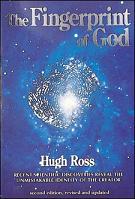
The Fingerprint of God


Book: The Fingerprint of God by Hugh Ross

Description: Dr. Hugh Ross, astromomer, tells the fascinating story of how the latest research into origins not only has sealed the case for divine creation, but has revealed the identity of the Creator Himself. (from Amazon.com)

Overall, I found this book to be a very worthwhile read. Ross attempts to prove with science why God must have created the universe and life, rather than seeing science and religion as polar opposites--a refreshing change, I must say. He also discusses, much more briefly, reasons why Scripture does not actually conflict with the scientific evidence for how the universe was created.

Honestly, those parts of the books were the parts that I enjoyed the most. I love biology, but I get sick of the assumptions that evolution and Creation are two mutually exclusive ideas. They are not. After all, 
it is also safe to assume that physical evidence will not lie, because God created the evidence and God can't lie (although misinterpretations could of course still happen). Ross even goes so far as to argue that one can only reach the fullest understanding of God through a combined knowledge of Scripture and nature.

I will admit, however, that I had some problems with this book. The first half at least of the book was about astrophysical proof for God, and was written in a way that I couldn't understand most of the proofs or why they were so impressive. Too much math and quantum mechanics for me! So I didn't exactly feel convinced by the end of it.

★★★★

My favorite quote: "One further consideration [of the reasons for creation] from an altogether different perspective concerns the nature of creativity itself. Observe any skilled sculptor, painter, or poet, a craftsman of any kind. Observe the painstaking, yet joyful labor poured into each object of his design. Examine the creation on any scale, from a massive galaxy to the interior of an atom, from a whale to an amoeba. The splendor of each item, its beauty of form as well as of function, speaks not of instantaneous mass production, but rather of time and attention to detail, of infinite care and delight. Such delight is expressed throughout Genesis 1 in the oft-repeated statement, 'And God saw that it was good.'" (160)

Thursday, August 23, 2012

Great Quote

I ran across this quote in The Craft of Research, by Wayne C. Booth, Gregory G. Colomb, and Joseph M. Williams:
No place is more filled with imagined voices than a library or lab. Whether you read a book or a lab report, you silently converse with its writer--and through her with everyone else she has read. In fact, every time you go to a written source of information, you join a conversation between writers and readers that began more than five thousand years ago. (p. 16)
And that pretty much sums up why I read.

Sunday, August 19, 2012

Is God a Moral Monster?


Book: Is God a Moral Monster?: Making Sense of the Old Testament God by Paul Copan

Description:  A recent string of popular-level books written by the New Atheists have leveled the accusation that the God of the Old Testament is nothing but a bully, a murderer, and a cosmic child abuser. This viewpoint is even making inroads into the church. How are Christians to respond to such accusations? And how are we to reconcile the seemingly disconnected natures of God portrayed in the two testaments?

In this timely and readable book, apologist Paul Copan takes on some of the most vexing accusations of our time, including:

God is arrogant and jealous
God punishes people too harshly
God is guilty of ethnic cleansing
God oppresses women
God endorses slavery
Christianity causes violence
and more

Copan not only answers God's critics, he also shows how to read both the Old and New Testaments faithfully, seeing an unchanging, righteous, and loving God in both.

This book was very enlightening for me. The seeming differences between the God of the Old Testament, who at the very least seems much more legalistic and violent than the God of the New Testament, are something that I've had questions about for a long time. I was therefore pretty excited about reading this book, and I wasn't disappointed. 

Copan did a very good job explaining why God seems the way that He did in the Old Testament. He mostly focused on the Law and explaining how and why they came to be. He also talked, surprisingly a lot, about how those laws apply to us today. I'm not saying Copan calls for us to follow the Law today, because he definitely doesn't. Instead, he examines what aspects of God made Him create the Law the way He did. One example that really struck me was the food laws, about unclean and clean animals. Copan argued that these laws were so all-encompassing to remind the Israelites that God should be everywhere in their life. A reminder we could all use, huh?

Although I have no background in Biblical scholarship or anything of that kind, I found Is God a Moral Monster? easy to read and understand. Copan's knowledge of and use of Scripture was also extremely impressive. My one complaint was that Copan's chapters became repetitive at times, as he seemed to be making the same point over and over. But it was a small problem for me as a reader, and I would absolutely recommend this book to anyone who's interested in the topic.

Sunday, August 12, 2012

Sir Gawain and the Green Knight


Book: Sir Gawain and the Green Knight (anonymous)

Time: Written sometime in the late 14th century

Description: Written by an anonymous fourteenth-century poet, Sir Gawain and the Green Knight is recognized as an equal to Chaucer’s masterworks and to the great Old English poems, Beowulf included. A green-skinned knight offers the Knights of the Round Table a simple but deadly challenge—a challenge taken on by the brave Sir Gawain. A challenge that will force him to choose between his honor and his life... (from amazon.com)

I enjoyed this book, very much. Firstly, the poetry was very cool. It didn't rhyme (except for the last five lines of each stanza), but rather there were three or four words in each line that began with the same sound.

I really enjoyed the descriptions--they were very vivid. I'm not sure why that surprised me, but it did. The descriptions of the seasons and of Sir Gawain's journey were especially vivid and enjoyable for me.

This was very much a Christian book/poem throughout: Gawain is very Christian, tries hard not to sin (which (not sinning, I mean) he does a bit too much to feel realistic, but anyway. The narrator will only admit that he sinned once in the entire year that the narrative spans and, let's face it, if that were true than there wouldn't be quite as much of a need for Jesus), prays a lot. When his host's wife literally throws herself at him, he doesn't even think about doing anything with her. Good for him! He does, in the end, do something else instead, which brough up an interesting point--at the end it was decided that that sin wasn't "too big". But sin is sin, period. I loved Gawain's reaction to the realization that he'd sinned, though--he admits it and repents, straight up. From Gawain I just very much got the feel of someone trying hard to strive for God and His perfection. Also loved his faith: almost always he was determined to do what was right, no matter what the consequences might be. 

Overall, this book had a great Christian world-view and was a very enjoyable read.

Wednesday, July 25, 2012

Persuasion


Firstly, may I begin by apologizing for my long silence? Don't worry, I haven't stopped reading, by any stretch of the imagination, but my reading time has mostly been snatches of time before work and during meals, as well as for most of Sunday afternoon (as part of my Sabbath). But this curtailed reading time has meant that I haven't been doing much writing about what I've read.

Anyway, thanks for your patience! Here's a review of a book that I finished back at the beginning of the month.

Book: Persuasion by Jane Austen

Time: set in the years 1814 and 1815

Description: Superb novel, autumnal and mellow in tone, concerns the lives and loves of the Elliot family and their friends and relatives, in particular the thwarted romance between Anne Elliot (Austen's sweetest, most appealing heroine) and Captain Frederick Wentworth. Finely drawn characters, gentle satire and wonderful recreation of genteel life in the English countryside. (from amazon.com)

I really enjoyed this book. It was the first book that I've read in a while where I was excited for the end to find out what happened and how it ended, not simply to reach the end.

I really liked Anne, the main character. She was a character I could really relate to and like from beginning to end.  I thought she handled the whole situation honorably, as did Captain Wentworth. It was a welcome change. I really felt for Anne, and wanted things to turn out well. Man, her family was horrible! How did she turn out so well??

I found all the characters and situations realistic and engaging. I'll admit, though, that I really enjoy scenes that play on awkwardness, either because of (unknown) social norms or because of emotional undercurrents, and there was a lot of the second, especially, in this book.

It was the shortest of Austen's books that I've read so far, and also, I thought, the easiest (but maybe I'm just getting used to her style). It was possibly the book that I've enjoyed the most as well (although Emma might also claim that distinction).

Tuesday, July 3, 2012

Planning

About a week ago, I spent probably an hour online, researching possible books I could read. It was very exciting--look at all these cool books I could read! I researched each book, typed its name on my list of books that I want to read. And then I realized: I could have used this time to read instead of to plan. Yes, some planning is good; but I had reached the point where I almost spent more time deciding what to read in the future than I did actually reading books. How ridiculous is that?!

Monday, July 2, 2012

Journey Through Time

I've decided to challenge myself with another goal as well: to read a book set in and published during every time period between the year 0 and the present. My time periods are honestly completely subjective, and have nothing to do with actual historical periods; I just divided earlier years, with less books, into hundred-year blocks, and made the time blocks smaller as books became more common.

As with the Read Around the World challenge, this challenge isn't about finishing by a certain time so much as it is about the journey: reading books from all different time periods, seeing how other people thought and did things.

Saturday, June 9, 2012

Heart of Darkness

Book: Heart of Darkness by Joseph Conrad

Country: Democratic Republic of the Congo


Description: A masterpiece of twentieth-century writing, Heart of Darkness exposes the tenuous fabric that holds "civilization" together and the brutal horror at the center of European colonialism. Conrad's crowning achievement recounts Marlow's physical and psychological journey deep into the heart of the Belgian Congo in search of the mysterious trader Kurtz. (from amazon.com)

(I wrote this right after I finished the book back in April)

Wow.  Beautifully, beautifully written.  Especially the first few times I sat down to read this book, it really drew me in--into a world where everything seemed mystical and mysterious and ... I don't even know, but the mood created by Conrad was amazing, dark and brooding and mystical.  Kept coming back to mystical, because there was such a sense, at least in the narrator's mind, of this darkness, personified in the extreme, waiting to tempt and destroy 'civilized' men.

Was really racist.  On the one hand, Conrad really really condemns the greed and cruelty in the Congo, the darkness that creates in people--but on the other hand seems to see that as a result of the corrupting influence of the dark wild, wild jungle, and he saw the Africans as having succumbed to that influence entirely. But also condemned imperialism, I thought, even while he thought Africans inferior--in the beginning he compared the wilds of Africa to what Great Britain must have been like for the conquering Romans thousands of years ago, which I thought was a really powerful comparison--but maybe he was just talking about the lack of civilization. He did make one other similar comment, however; he said something about how all the villages along the main road were deserted, but then adds something along the lines of, "Of course, if some group of people started marching through Dover and making people carry heavy loads for them, I imagine Dover would clear out pretty fast too."

This interesting idea that civilization keeps the savagery away. Must say I don't agree. 'Civilized' people can be just as cruel, if not crueler, than so-called 'savages'.  Also the play between others seeing what you're doing--Marlowe comments a few times about how the men were all alone, with no one watching them, i.e. they had 'ultimate power'.  Definitely a play throughout of men as 'gods'.  But society doesn't keep us from cruelty or sinning. Sinning is in our nature.  Who says that outright cruelty is a worse sin than things like corruption or whatever, that happens in 'society'?  Maybe murder and so on only seems so horrible to us because we don't see it as much as, say, premarital sex.  But that doesn't make those other things any less of a sin.  And just because society says something is right or wrong doesn't mean society is right.

Also: Hochschild said something about how people seem to think that Heart of Darkness isn't really about the Congo, since a lot of the movie adaptations aren't even set in Africa.  But he argues that it is about the Congo.  I think, though, that Conrad may have meant it to be about the Congo, but he really wrote a book about humans and the evil side of them.

★★★★★

King Leopold's Ghost

Book: King Leopold's Ghost: A Story of Greed, Terror, and Heroism in Colonial Africa by Adam Hochschild

Country: Democratic Republic of the Congo

Description: In the 1880s, as the European powers were carving up Africa, King Leopold II of Belgium seized for himself the vast and mostly unexplored territory surrounding the Congo River. Carrying out a genocidal plundering of the Congo, he looted its rubber, brutalized its people, and ultimately slashed its population by ten million--all the while shrewdly cultivating his reputation as a great humanitarian. Heroic efforts to expose these crimes eventually led to the first great human rights movement of the twentieth century, in which everyone from Mark Twain to the Archbishop of Canterbury participated. King Leopold's Ghost is the haunting account of a megalomaniac of monstrous proportions, a man as cunning, charming, and cruel as any of the great Shakespearean villains. It is also the deeply moving portrait of those who fought Leopold: a brave handful of missionaries, travelers, and young idealists who went to Africa for work or adventure and unexpectedly found themselves witnesses to a holocaust. Adam Hochschild brings this largely untold story alive with the wit and skill of a Barbara Tuchman. Like her, he knows that history often provides a far richer cast of characters than any novelist could invent. Chief among them is Edmund Morel, a young British shipping agent who went on to lead the international crusade against Leopold. Another hero of this tale, the Irish patriot Roger Casement, ended his life on a London gallows. Two courageous black Americans, George Washington Williams and William Sheppard, risked much to bring evidence of the Congo atrocities to the outside world. Sailing into the middle of the story was a young Congo River steamboat officer named Joseph Conrad. And looming above them all, the duplicitous billionaire King Leopold II. With great power and compassion, King Leopold's Ghost will brand the tragedy of the Congo--too long forgotten--onto the conscience of the West. (from amazon.com)

(I wrote these on two separate occaisions, during and after I was reading King Leopold's Ghost in March of this year)


Wow, I'm so impressed with this book so far (just finished chapter 8 or 9).  Firstly, Hochschild out and out condemns the horrors and crimes that happened in the Congo--no justifying their actions because of the norms of the time or anything (although he does explain some of hte cutlural stuff going on, it is absolutely not in a way to justify their actions, more in a way to help us understand).  He also condemns the main actors in the whole thing, especially King Leopold II of Belgium.  Hochschild doesn't hide his contempt for him--and no, I don't think it's too strong of a word--or for some of the other main people.  I must say, all of the people are very well described and feel very real to me.  Even the people who fought against what was happening in the Congo weren't described as saints--he also described their faults, and honestly rather condemned those parts of them even while praising them for their other actions.

The whole things seems so real.  Very well-written, and in a way to engage the reader.  Described so interestingly, and often with really interesting epeople, too.  Hochschild is also so sarcastic!


Review:
Wow.  Need a moment to gather my thoughts...

A lot of what I said last time are still my strongest impressions of the book: Hochschild's whole-hearted condemnation of practically everything and everyone that had anything to do with the exploitation of the Congo, his portrayals of people (and, untimately, the movement against what was happening in the Congo) were fair and portrayed both the good and bad aspects.  He was also curiously cynical and optimistic at the same time--acknowledged human nature, questioned the fact that there were so many other horrible things going on at the same time that no one even questioned, pointed out that not much changed in the Congo after the reforms even to the present day, how the 10 million dead not acknowledged by Belgium today; but also praising the efforts of everyone working against what was going on in the Congo, and definitely thinks well of organizations fighting for human rights today.
Really impressed with how hard Hochschild tried to acknowledge important workers in the story, especially people not much talked about before (often because they were black).  Also pointed out that Africans weren't all that innocent or virtuous before Europeans came, something I found oddly brave--no one ever wants to talk about that.

Would highly recommend.  Riveting story and resounding condemnation of imperialism, exploitation, and greed.

★★★★★

Half of a Yellow Sun

Book: Half of a Yellow Sun by Chimamanda Ngozi Adichie

Country: Nigeria


Description:  With effortless grace, celebrated author Chimamanda Ngozi Adichie illuminates a seminal moment in modern African history: Biafra's impassioned struggle to establish an independent republic in southeastern Nigeria during the late 1960s. We experience this tumultuous decade alongside five unforgettable characters: Ugwu, a thirteen-year-old houseboy who works for Odenigbo, a university professor full of revolutionary zeal; Olanna, the professor’s beautiful young mistress who has abandoned her life in Lagos for a dusty town and her lover’s charm; and Richard, a shy young Englishman infatuated with Olanna’s willful twin sister Kainene. Half of a Yellow Sun is a tremendously evocative novel of the promise, hope, and disappointment of the Biafran war. (from amazon.com)

(Various thoughts I wrote down while reading the book last January, as well as my review)

Too much sex.  Very poignant other than that, though, and very poetic thoughts of everyone.

All the violence and suffering makes me think how lucky I've been in my life.

Really liked.  Very well written.  Showed the violence, disappointment, and corruption (moral as well as governmental), suffering that comes of war.  Showed how both sides did horrible things--Nigerians massacred Igbo, really cruel to the Biafrans after the war and when occupying.  But Biafrans had high officials who were living in luxury while the people starved and were bombed, "conscripted" anything male practically, and the soldiers raped and stole and were arrogant just like the Nigerian soldiers.
Characters very believable.  They all struggled, and I thought they persevered and broke down and suffered in very, very realistic ways.  I do stand by my earlier assertion that there was too much sex, but I do agree that it all served the story and character development.  The same was true of the violence--all graphic, but absolutely none of it pointless.

Would definitely recommend. Made me think/reflect on violence, on how much we have and how much others don't have, on how there's still injustice (because even though set in the 60s felt modern, too).