Tuesday, November 5, 2013

Long Walk to Freedom

Book: Long Walk to Freedom by Nelson Mandela

Country: South Africa

Description: Here Nelson Mandela recounts his life up to the time he voted for the first time (1994). He includes his childhood, time as a lawyer, and his 27 years in prison.

My Thoughts: Long Walk to Freedom was a fascinating read. Mandela was incredibly honest about his regrets, especially that he didn't spend enough time with his family. Of course the perspective is biased, but it is his memoir, after all!

Mandela wrote in a very conversational style which made Long Walk to Freedom easy to read. I'll admit that at first I found it slightly off-putting--he very much tells you what he was feeling at any given time, rather than trying to help you feel what he was feeling--but I suspect that was more of a left-over on my part from reading too many novels. The style worked very well for what he needed to do, which was tell the story of his life.

What I found most powerful was Mandela's descriptions of his childhood and young adulthood. It was during this period that he still thought that whites were superior in every way, and I loved hearing about how he fought against this perception until it was no longer the truth for him that it had once been. It was also something of a shock--I've never thought much about what it would be like to grow up utterly believing that a certain group or race or whatever was so superior. Mandela did a great job describing the process of discovering the lies he'd been told, and I especially liked the little incidents he described that showed this process: the first time he saw a black man stand up to a white man and not be reprimanded, the first time he was humiliated at being sent on an errand by a white man he didn't know (rather than agreeing that he should be sent on errands).

A fascinating book on Mandela's life and the end of apartheid in South Africa.

Thursday, October 17, 2013

The Naming

Book: The Naming by Alison Croggon
(The First Book of Pellinor)

Description: Maerad is a slave in a desperate and unforgiving settlement, taken there as a child after her family is destroyed in war. She is unaware that she possesses a powerful gift, one that marks her as a member of the School of Pellinor. It is only when she is discovered by Cadvan, one of the great Bards of Lirigon, that her true heritage and extraordinary destiny unfold. Now she and her new teacher must survive a journey through a time and place where the dark forces they battle stem from the deepest recesses of otherworldly terror.
(from the book jacket)

My Thoughts: As the description hints at, this is not a fantasy full of superficial happiness and glittery fairies. Croggon does not hesitate to grapple with the evil and cruelty in the world and in the human soul. But if the land of Annar is full of darkness, it also full of equally good, kind people who refuse to be cowed by the darkness around them.

Croggon is a masterful writer; her descriptions of the land and the people Maerad and Cadvan see are gorgeous--so easy to read, and they make everything just seem to jump off the page. She is equally skilled at describing Maerad's emotions. Maerad is one of the few characters I've read, certainly recently, that is realistic in ways that I didn't even think about until Croggon brought them up, things like Maerad having her period or not behaving consistently all the time (sometimes she's afraid and timid, at other times brave; sometimes she's mature beyond her years, at other times she sulks). She's just a person. Other characters, although of course not described in depth, are also well-developed, and in a sense that seems true to life where bits and pieces are revealed over time.

The Naming is the beginning of an epic fantasy series, in the best sense of an epic (it is actually supposedly based on an ancient Annaran epic poem). It draws heavily from Lord of the Rings in some ways, and that's certainly what it reminds me of, but I'll admit that I much prefer this series. Croggon includes multitudes of female characters performing awesome feats but also just living, there's actual character development, and it's a world that is both distant and familiar.

My one complaint against The Naming is how quickly Maerad changes after she is rescued from slavery. She's rescued... and two or three weeks later she's happily learning how to write (which she's amazingly good at) and use a sword at a School, apparently well-adjusted to her new circumstances. A bit far-fetched to me.

Overall, a fantastic fantasy novel with strong but imperfect characters and an enchanting world. Highly recommended!!!

Friday, October 11, 2013

Reading quote

"If a man wants to be always in God's company, he must pray regularly and read regularly. When we pray, we talk to God; when we read, God talks to us."
                      ~Isidore of Seville

Tuesday, October 8, 2013

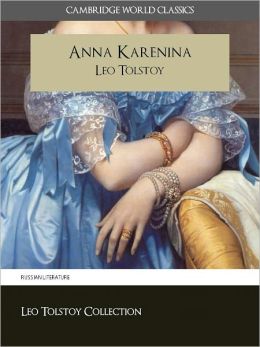
Anna Karenina

I'm so sorry for the long silence!! I hope to actually get back to regularly posting now.

Book: Anna Karenina by Leo Tolstoy

Description: Anna Karenina is the complex story of a group of closely-related people in high Russian society (related by blood, by marriage, and simply by acquaintance). Anna, a married woman, is wooed by Vronsky, breaking Kitty's heart. Anna's sister Dolly is heartbroken by her own husband's affairs. Levin is in love with Kitty but almost too shy to admit it. [Full confession: despite the book's name, all of these people are important! And this is a wholly inadequate description, but I'm not sure how much more I can say without giving anything away.]

My Thoughts: I loved it! Tolstoy's writing powerfully created such realistic characters that I truly felt as if they could just walk off the page. Their thoughts and decision-making processes were so realistic! What created this realism for me was Tolstoy's painstaking attention to every detail about the character: their every movement, action, and thought. At times this became tedious (like real life!), but it always expanded my understanding of the character(s). And an interesting note about Tolstoy's style: unlike the oft-quoted writing commandment to "show, don't tell", Tolstoy tells us huge amounts of information about the characters: what they're doing, what they're feeling, the complicated reasons that they're doing and feeling those things--and it worked!!

A huge part of this realism was the fact that a huge portion of the characters ended up making horrible decisions and being miserable. At times it was difficult to read! It was heart-rending to watch characters change from joyful, moral people to miserable, sinful people, often as a result of one single bad decision that they then repeated and compounded over time.

I know that there were huge parts of Anna Karenina that went over my head. It seems very grounded in a specific time and place in Russian history--a time and place that I know little to nothing about. There were references to religious movements, for instance, that ended up being important, but I didn't understand a lot of the specifics about it. This problem was compounded by the fact that I had to give the beautifully annotated version back to the library and finish with an e-book!

Ultimately, a hugely poignant but also joyful examination of human sinfulness and human strivings for more. I thoroughly enjoyed Anna Karenina, and cannot recommend it enough.


A note on the cover: unfortunately the gorgeous cover above is not the one from the version I read. It's perfect--that is exactly how I imagined Anna. I admit I can't even remember what my cover looked like (a slightly blue-tinted black-and-white photograph? Perhaps of fabric?), so it clearly didn't make a huge impression on me.

Friday, September 27, 2013

O, Jerusalem

Book: O, Jerusalem by Laurie R. King

Country: Israel


Description: O, Jerusalem is the fifth book in an ongoing series about Sherlock Holmes and his student, Mary Russell. They were forced to flee England because of a case there, and take refuge in the Holy Land, acting as spies for Holmes' brother Mycroft while disguised as native Arabs. While there, they begin to discover disturbing patterns, and must discover the mastermind behind these incidents... if they can.

My Thoughts: This should clearly be the point where I admit that I love the Mary Russell series, and that this is most definitely not my first time reading O, Jerusalem. Russell is a fascinating character, if a bit unrealistic for the time: a Jewish feminist Oxford scholar who also works with Sherlock Holmes to solve cases? Ah, well. She's great fun to read about when disbelief is suspended, and snarky to boot.

King is adept at creating a sense of place in her novels. They are some of the few novels I've read where I felt as if I knew more about the setting, almost the feel of the place--probably because Russell and Holmes invariably abandon their high-class clothes and setting and venture out dressed as a true inhabitant would be. And so they visit the Dead Sea, Jerusalem, and deserts and cities and monasteries and have entirely different experiences than they would have as tourists. Perhaps that is why I chose to review O, Jerusalem first on my newly-redesigned blog: because it was suffused with a sense of wonder for the Holy Land. Russell is a Jew, after all, and an extraordinarily knowledgeable one at that. O, Jerusalem is full of history of the land of Israel, from early Biblical events up to what was known as the Great War. That knowledge colors her, and therefore our, view of the land she travels through. And the wonder of the Holy Land is what sparked my reread of the book, since it was being covered in my Old Testament class, and I wanted to immerse myself in the land. Although the novel comes from a more secular point of view (there is really no mention of God, or of the possibility of His existence), King clearly respects the history of the land, and I find it a fascinating view of the Holy Land.

Although technically a mystery novel, solving the mystery is second to their travels for most of the book, and it is an odd mix of mystery, adventure, and travel novel. Odd, but certainly enjoyable and well-done.

A perfect novel to curl up with when one wants something light, entertaining, but also educational on the land of Israel.

Wednesday, September 18, 2013

Why am I reading?

These first few weeks of seminary, many professors have brought up the importance of learning for the right reasons: not to know more, but to become closer to God or to know Him more.

Am I reading for that reason?

I wanted to change the focus of the blog--well, really just give it a focus at all. I was hoping to do so this week, but it's clear to me now that I need more time to reflect and pray on it. Bear with me!

Tuesday, September 10, 2013

Change is in the air!

Changes are coming to Thoughts of a Christian Bibliophile, rather extensive ones possibly including a new name for the blog. Certainly they will include a new posting schedule and a more focused theme. Stay tuned! The new site will premiere next Monday.

          ~Alina

Monday, September 9, 2013

Books!

No book review today. Instead I'm just going to ramble a bit.


______________________________________________________

Today I was reading a book for class about the history of Christian spiritual disciplines. The author was listing off person after person after person who had written books during the early Christian period, probably up to 4 or 5 AD. I had heard of almost none of them (except Augustine), and I was just so overwhelmed at how many books must exist in the world, in so many languages and from so many times. That is both the blessing and the curse of reading: the ability to read what was left behind by people from other places and times, but also the knowledge that it is impossible to read it all, impossible to read even a decent chunk of it.

Perhaps that is why I read so many different types of books, from so many different times. I do not want to limit myself to one time or place or person or genre. There are so many possibilities!


It's also a sobering thought. I could spend every second of my life reading and never read nearly as much as I'd like to. There would still be so much that I hadn't read! However much I try to discover and experience, there will always be more. It's both exciting and sobering.

What's truly exhilarating, however, is the fact that God knows what's in every book, because He was there when it was being written. He is infinite, He is everywhere, He is amazing and awesome and all-knowing, and it's days like this that I love Him in ways that I can't explain or describe.

Thursday, September 5, 2013

A to Z Bookish Survey

I saw this on Bibliotropic (although it was originally from The Perpetual Page-Turner) and thought it looked like so much fun!

Author you've read the most books from:
Probably Agatha Christie. Since I've been keeping track, though (since fall 2011) it's been J. K. Rowling.

Best sequel ever:
Hm... this is a tough one! Probably The Riddle by Alison Croggon. It was my favorite book of the Pellinor series.

Currently reading:
The Bible, of course (always!). I just started Cloud Atlas by David Mitchell. I'm also working my way, very slowly, through The Origin of Species by Charles Darwin and The Song of the Nibelungs.

Drink of choice while reading:
I much prefer water. So refreshing! Only if it is cold and/or dreary out (or if I'm sick) will I prefer tea.

E-reader or physical book?
Physical book! I love having a real book in my hands, and I love the physical act of turning pages. It is also so much easier to flip back and review sections you've forgotten in a physical book. Oh, I also love the smell of the paper in a book, and the different textures of the pages. The physical book, for me, shapes the feel I have going into a book. My copy of The Neverending Story, for instance, was gorgeously illustrated, and that made it so much easier to start reading it with such a sense of wonder.

The one exception is long classics. While I still prefer reading from a physical book, it's easier to read a digital copy if I don't actually own one, since reading a book like Anna Karenina in the three week loan period is not possible while I'm in school (although I gave it a good go!). I mention classics specifically since most of them are available for free on Project Gutenberg. :)

Fictional character you probably would have actually dated in high school:
I have absolutely no idea. I didn't date in high school!

Glad you gave this book a chance:
Divergent. I was feeling very anti-YA lit just then, and it seemed like just another YA book. Thankfully it wasn't!

Hidden gem book:
King Leopold's Ghost by Adam Hochschild. I say it's a hidden gem not because it's an obscure book (it's pretty well-known, I think) but because it doesn't sound nearly as good as it is (it's a book about exploitation and genocide in the Belgian Congo. I know it doesn't get much more depressing than that, but it was also inspiring. Hochschild told the stories of those who fought against the injustice, and always clearly condemns the horror of the regime).

Important moment in your reading life:
Definitely the moment that I realized that reading could be done for the glory of God and to know Him better. It wasn't a moment so much as a long, slow realization, however.

Just finished:
Inkdeath by Cornelia Funke. As always, she was a masterful writer, and thankfully it was much better than the second one.

Kind of book you won't read:
Most romance books. Horror novels, math books.

Longest book I've read:
Gone With the Wind by Margaret Mitchell.

Major book hangover because of:
I'm not sure what a 'book hangover' is...

Number of bookcases you own:
Three, but such a small number is only possible because so many of my books are away from home with me at seminary.

Okay, I also prefer to get a book from the library before committing to buying it.

One book you have read multiple times:
Since it's impossible to pick only one (I love rereading good books!), I'm going to pick the ones that I've reread the most often. I've reread the first three Harry Potter novels easily twenty times each (I used to get super into them when I was eleven and twelve), especially Prisoner of Azkaban. Seabiscuit by Laura Hillenbrand is probably the next closest, with probably ten rereads. For whatever reason, every spring for at least eight years I would have the very strong desire to reread it, plus I reread it a few times to write a paper on it.

Preferred place to read:
Sitting on my bed, or perhaps a couch or armchair. I love to read sitting cross-legged, which is easiest to do on my bed.

Quote that inspires/gives the feels:
"For the Lord stood by me and gave me strength" (2 Timothy 4:17) has been really inspirational for me lately.

Reading regret:
That I have read very little true science fiction (just Star Wars novels and I, Robot). I would love to read more of Isaac Asimov, and start authors like Ray Bradbury and Douglas Adams.

Series you started and need to finish:
I honestly can't think of the last series that I started. I've been pretty into stand-alone novels lately.

Three of your all time favorite books:
Ahh!! Okay... The Casual Vacancy by J. K. Rowling, Star Wars, Episode III: Revenge of the Sith by Matthew Stover, and Silent Spring by Rachel Carson.

Unapologetic fangirl for:
Star Wars, both the (original) films and the book series set in the twenty or so years after the (original) films. Star Trek (the original series and Deep Space 9, mostly). Harry Potter!

Very excited for this release:
Allegiant by Veronica Roth. The two earlier books in the series, Divergent and Insurgent, were probably my favorite YA books of the year, and Veronica Roth is probably my favorite author as a person. She is Christian without shoving it down her readers' throats and without writing anything Christian, but also a good witness.

Worst bookish habit:
Definitely my unreasonable expectations of myself. There are twenty-two books on the list I made of books I'd like to read in the next year (not including seminary readings).

X marks the spot: Start at top left and pick the 27th book on your shelf:
They Came to Baghdad by Agatha Christie.

Your latest book purchase:
Thirsty for God: A Brief History of Christian Spirituality by Bradley P. Holt, but that was for school. My last purchase for myself... wow, I'm not sure I can remember (I rarely actually buy books). Oh yeah! I bought All About Birds: A Short Illustrated History of Ornithology by ValĂ©rie Chansigaud and A Single Swallow by Horatio Clare at an overstock sale.

Zzz-snatcher book:
Any Harry Potter book, especially the last two. Recently also God at War by Gregory Boyd and the Artemis Fowl books by Eoin Colfer. Really, anything that's well-written and gripping will keep me up, especially if I'm feeling rebellious and don't feel like sleeping.

Monday, September 2, 2013

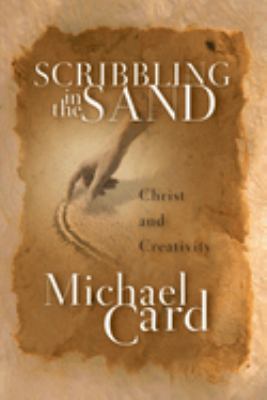
Scribbling in the Sand

Book: Scribbling in the Sand: Christ and Creativity by Michael Card

Description: In this book Michael Card explores the biblical foundations of true Christian creativity. Whether we think of ourselves as creative or not, all of us are created in the image of our Creator God, and thus creativity is a vital expression of our discipleship. With Jesus as his model, Card shows how understanding God's creative imagination leads to a lifestyle of humility, obedience and servanthood. And he invites us to follow God's creative call through worship and community. (from michaelcard.com)

My Thoughts: What a wonderful book!

Scribbling in the Sand is meant as a book to induce thought, not necessarily as a way to encourage creativity. Card spends the first part of the book describing Biblical instances of creativity (Adam naming the animals, Jesus' creativity in his ministry, the prophets and poetry...), which I really enjoyed. He then described several traits that any Christian artist should have. This section challenged me a lot and made me think about so many things, because these traits were exactly the traits that any Christian should have: humility, servanthood, obedience, love. The fact of being an artist is not the thing that defines any Christian artist; rather, their identity as a child of God and everything that implies (humility, etc.) is what defines any Christian artist. The 'Christian' is the important part, not the 'artist.'

The other of Card's points that really, really struck me was that any art that we create, however good or bad, however many people do or don't see/read/hear it, is worship. Art, in its purest form, is a form of worship of God. Why else would we use music in worship services? Why else would the psalmists and prophets speak in poetry (and probably accompanied by music)?

As an artist (I write), I enjoyed and struggled with this book. I have always struggled with finding a proper balance between my writing and God; it is so easy for me to fantasize uncontrollably about my stories and forget the God who is the ultimate Creator and Author (I've written a lot about it on my blog A Light to My Path, especially this post from a little more than a year ago). And so I immensely enjoyed and was challenged by Scribbling in the Sand: it painted a picture of what my writing could be while highlighting all the places I've fallen short. It gave me hope.

Perhaps the section that I most enjoyed was the last one, where Card included letters from various famous Christian artists about their views of art and artists in relation to Christ and His mission. I loved their advice and wisdom.

Incredibly highly recommended to anyone who sees themselves as a Christian artist of any kind--and perhaps even to those Christians who don't see themselves that way, because Scribbling in the Sand was so much more about Christianity than it was about creativity. That was rather the point of the book--our Christianity is so much more important than our creativity, even if the two are intertwined.